
 English
Content
- 1 Layered Lighting at 50–100 Lux Is the Foundation of Safe, Secure Courtyard Entrances
- 2 Understanding Lumen and Lux Requirements for Courtyard Entrance Lighting
- 3 The Three-Layer Lighting System for Courtyard Entrances
- 4 Best Fixture Types for Courtyard Entrance Lighting: Pros and Trade-offs
- 5 Color Temperature and Its Effect on Security and Atmosphere
- 6 Smart Controls That Maximize Security Without Wasting Energy
- 7 Energy Efficiency Comparison: LED vs. Traditional Lighting Technologies
- 8 IP Ratings and Weather Resistance: What Every Outdoor Fixture Must Have
- 9 Lighting Layout: Where to Position Fixtures for Maximum Coverage
- 10 Courtyard Entrance Lighting Application Share by Property Type
- 11 Frequently Asked Questions About Courtyard Entrance Lighting
- 11.1 Q1: How many lumens do I need for a courtyard entrance light?
- 11.2 Q2: What is the best height to mount a wall light at a courtyard entrance?
- 11.3 Q3: Will solar-powered lights provide adequate security at a courtyard entrance?
- 11.4 Q4: How do I prevent courtyard entrance lights from disturbing neighbors or causing light pollution?
- 11.5 Q5: Should courtyard entrance lighting be on a separate electrical circuit?
- 11.6 Q6: How often should courtyard entrance lighting fixtures be maintained?
Layered Lighting at 50–100 Lux Is the Foundation of Safe, Secure Courtyard Entrances
To meaningfully improve nighttime visibility and security at a courtyard entrance, install layered lighting that achieves a maintained illuminance of 50 to 100 lux at the entry path surface, combined with motion-activated accent lighting at perimeter zones. Research by the Illuminating Engineering Society (IES) confirms that well-lit entrances reduce the perceived opportunity for crime, with studies showing properties with adequate outdoor lighting experience up to 39% fewer nighttime intrusion incidents compared to poorly lit equivalents.
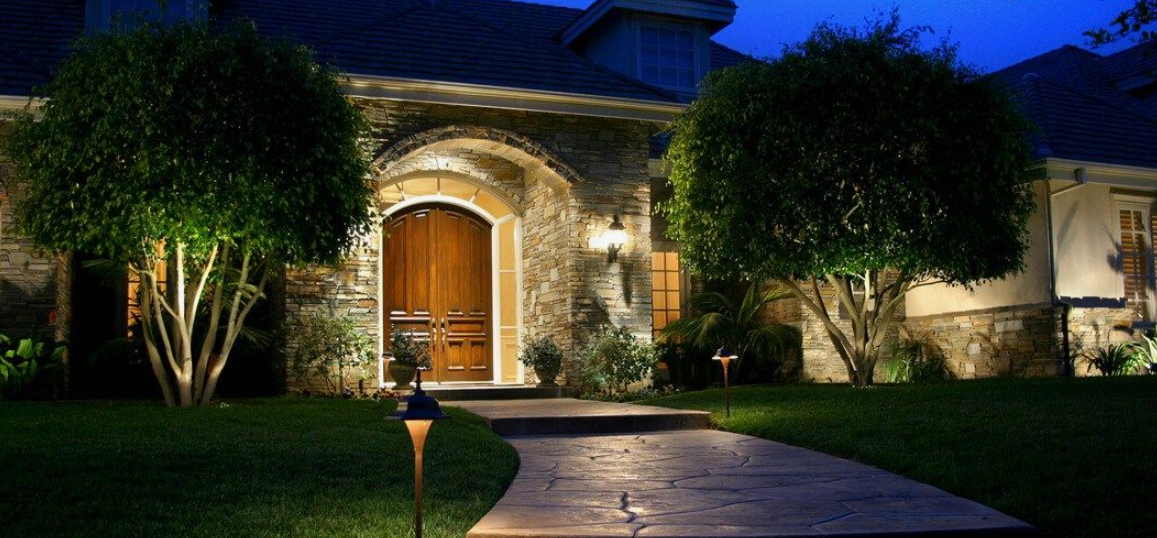
A single overhead fixture is rarely sufficient. Effective courtyard entrance lighting combines a primary overhead or wall-mounted source for general illumination, ground-level path lights for safe footing, and motion-triggered spotlights for perimeter awareness. When integrated with smart controls and appropriate color temperature choices, this layered system delivers both functional visibility and a visual deterrent effect that passive lighting alone cannot achieve. The sections below break down every element of this system with specific recommendations.
Understanding Lumen and Lux Requirements for Courtyard Entrance Lighting
Before selecting fixtures, understanding the difference between lumens and lux prevents the most common lighting planning mistake—choosing bulbs by wattage rather than by delivered illuminance at the surface that matters.
- Lumens (lm): The total light output of a fixture. A 10W LED typically produces 800–1,100 lumens. This tells you how bright the source is, not how bright the surface it illuminates will be.
- Lux (lx): Lumens per square meter—the actual illuminance at the working surface. This is what determines whether a person can see clearly and whether a security camera can capture usable footage. 1 lux = 1 lumen per 1 m².
- The inverse square law: Illuminance drops by the square of the distance from the source. A fixture mounted at 3m height delivers only one-ninth the surface illuminance of the same fixture at 1m. This is why mounting height matters as much as lumen output when planning courtyard lighting.
The table below shows IES and EN 13201 recommended illuminance levels for different outdoor areas relevant to courtyard entrances:
| Area / Application | Recommended Illuminance (lux) | Typical Fixture Type | Security Camera Requirement |
|---|---|---|---|
| Pedestrian pathway | 10–30 lux | Path bollard, ground spike | Minimum for motion detection |
| Entry gate / door area | 50–100 lux | Wall lantern, overhead post | Face recognition capable |
| Driveway / vehicle entry | 30–75 lux | Post-top, bollard, floodlight | License plate recognition |
| Perimeter / boundary wall | 5–20 lux (ambient) | Wall washer, uplighter | Intrusion detection only |
| Motion-triggered security zone | 150–300 lux (activated) | PIR floodlight | High-detail identification |
The Three-Layer Lighting System for Courtyard Entrances
Professional landscape lighting designers consistently use a three-layer approach for entrance areas. Applying this framework to a courtyard entrance produces both better visibility and a more secure environment than any single-fixture solution:
Layer 1 — Ambient (General) Lighting
The primary light source that provides overall illumination of the entry area. For a courtyard entrance, this is typically a wall-mounted lantern at 2.5–3m height, a post-top luminaire, or an overhead pendant if the entrance has a covered archway. Target output: 800–1,500 lumens for a compact 3×3m courtyard entrance; 1,500–3,000 lumens for a wider driveway entrance. Use a color temperature of 2700K to 3000K (warm white) for residential courtyard entrances—this creates a welcoming atmosphere while providing sufficient visibility. For commercial or security-focused applications, 4000K neutral white improves contrast and facial recognition.
Layer 2 — Task (Path) Lighting
Ground-level lighting that illuminates walking surfaces and defines the edges of pathways and steps. Bollard lights, flush ground lights, and step-integrated LED strips are the primary options. Place bollard lights on alternating sides of the path at 2–3m intervals to create even surface illuminance without glare. For steps at the courtyard entrance, recessed step lights at each riser are both the safest and most aesthetically refined option—delivering 50–100 lux at the step surface without creating glare for descending visitors.
Layer 3 — Accent and Security Lighting
Directional lights that highlight specific features (gate pillars, architectural elements, planting) and provide motion-activated security response. PIR (passive infrared) floodlights should be positioned to cover the approach zone 3–5m in front of the entrance and any side access points. When triggered, these fixtures should deliver 150–300 lux—sufficient for security camera face identification at distances up to 5m. For decorative purposes, uplighting gate pillars or flanking trees at 5–15 watts creates visual anchors that define the entrance and increase perceived security through environmental clarity.
Best Fixture Types for Courtyard Entrance Lighting: Pros and Trade-offs
| Fixture Type | Typical Output | Best Position | Key Advantage | Limitation |
|---|---|---|---|---|
| Wall lantern / sconce | 400–1,200 lm | 2.0–2.8m on gate pillars or walls | Welcoming aesthetic; wide spread | Limited directionality |
| Post-top luminaire | 800–2,500 lm | 2.5–4m freestanding at entry | 360° coverage; strong visual anchor | Requires ground installation |
| Bollard light | 150–600 lm | 0.6–1.2m along path edges | Low glare; path definition | Low output; needs multiple units |
| PIR floodlight | 1,500–5,000 lm | 3–5m high, angled at approach zone | Strong deterrent; on-demand power | Can be triggered by animals |
| Ground spike uplight | 200–800 lm | At base of pillars, trees, or walls | Dramatic effect; visual boundary | Does not illuminate walking surface |
| Recessed step light | 50–200 lm | In step risers at entry stairs | Zero glare; precise task lighting | Requires IP65+ rating for wet exposure |
Color Temperature and Its Effect on Security and Atmosphere
Color temperature (measured in Kelvin) affects both how the entrance feels and how well security systems perform. Choosing the right color temperature is one of the most impactful and least expensive decisions in courtyard entrance lighting design:
Figure 1: Relative performance of different color temperatures for courtyard entrance applications
The practical recommendation: use 2700K–3000K for ambient and decorative fixtures (lanterns, bollards, uplights) to create a welcoming, residential atmosphere, and 4000K for any fixture that feeds a security camera or covers a zone where facial identification may be needed. Mixing these color temperatures within a single entrance is acceptable—the key is ensuring the camera coverage zones receive neutral or cool white light.
Smart Controls That Maximize Security Without Wasting Energy
Fixed-on lighting wastes energy and creates light pollution that can actually reduce security by eliminating the contrast between normal and abnormal conditions. Smart control systems solve this by delivering the right light level at the right time:
Motion-Activated PIR Sensors
Passive infrared sensors detect body heat movement and trigger high-output floodlights for a set duration (typically 30 seconds to 5 minutes, adjustable). Position PIR sensors to cover a detection zone beginning 5–8m before the entrance to provide advance warning rather than reacting only when someone is already at the gate. Modern dual-technology PIR sensors that combine infrared with microwave detection reduce false triggers from animals and vegetation by 60–80% compared to single-technology PIR sensors.
Dusk-to-Dawn Photocell Controls
Photocell controllers automatically switch ambient lighting on at sunset and off at sunrise, eliminating manual switching and ensuring the entrance is always lit during dark hours. For energy efficiency, combine photocell control with dimming to 30–50% output after midnight when pedestrian activity is minimal—this reduces energy consumption by 50–65% on the ambient circuit while maintaining sufficient deterrence lighting. Most smart LED drivers support 0–10V or DALI dimming protocols compatible with this approach.
Smart Lighting Systems with App Control and Alerts
Smart lighting systems (such as those compatible with Matter, Zigbee, or Z-Wave protocols) allow scheduling, dimming, and remote triggering from a smartphone. When integrated with a security camera system, motion at the entrance can simultaneously trigger the lights, start camera recording, and send a push notification to the homeowner's phone. This integration converts courtyard entrance lighting from a passive safety feature into an active security monitoring system with no increase in hardware cost beyond the smart controller.
Energy Efficiency Comparison: LED vs. Traditional Lighting Technologies
For new courtyard entrance lighting installations, LED is the only technology that makes practical sense in 2024. The performance gap versus older technologies is decisive across every relevant metric:
Figure 2: Performance comparison of outdoor lighting technologies across key metrics
A 10W LED lantern producing 1,000 lumens replaces a 60W halogen producing equivalent output—an 83% reduction in energy consumption. At 8 hours per night, this saves approximately $35–$50 per fixture per year in electricity costs (at $0.15/kWh), while the LED's 50,000-hour lifespan versus halogen's 2,000 hours means 25× fewer bulb replacements over the fixture's lifetime.
IP Ratings and Weather Resistance: What Every Outdoor Fixture Must Have
Every fixture installed in a courtyard entrance is exposed to rain, humidity, dust, and potentially direct water spray. The IP (Ingress Protection) rating system defines exactly how much environmental exposure a fixture can withstand:
- IP44: Protected against solid objects over 1mm and water splashing from any direction. Minimum acceptable rating for a covered courtyard entrance or sheltered wall mount. Not suitable for exposed locations.
- IP54: Dust-protected and splash-resistant. Suitable for most exposed wall and post-mounted courtyard fixtures in temperate climates. This is the practical minimum for any fixture in an open-air entrance.
- IP65: Fully dust-tight and protected against low-pressure water jets from any direction. Recommended for all ground-level fixtures (path lights, step lights, ground spikes) and any fixture in a climate with heavy rainfall or coastal exposure.
- IP67/IP68: Required for fully submersible fixtures (underwater pond lights, below-grade ground recessed lights in zones where pooling water occurs). Excessive specification for most courtyard entrance applications unless flooding is a known risk.
For courtyard entrance fixtures in most residential and commercial applications: specify IP54 as minimum for wall and post fixtures, IP65 for all ground-level and step-integrated lights. Fixtures rated below these thresholds will experience premature failure from moisture ingress—the most common cause of outdoor lighting failure within the first 2 years of installation.
Lighting Layout: Where to Position Fixtures for Maximum Coverage
Fixture positioning determines whether the lighting system achieves uniform coverage or creates bright spots and dark shadows that reduce both safety and security. The following placement principles apply to most courtyard entrance configurations:
- Flank the gate opening symmetrically. Mount wall lanterns or post lights on both sides of the gate at equal heights (2.0–2.5m) to illuminate the entry face without shadow. A single-side mounting creates a half-lit entrance with deep shadows on the unlighted side—precisely the shadow zones that compromise security.
- Position overhead light directly above the threshold. If the entrance has an overhead structure (arch, pergola, canopy), mount a flush or pendant fixture directly above the gate threshold. This provides downward illumination of the person entering and the lock/keypad area without glare.
- Extend path lighting 3–5m beyond the gate. Lighting should extend from the public sidewalk through the courtyard entrance and into the immediate interior path. A well-lit transition zone prevents the disorienting contrast between a bright entrance and an immediately dark interior courtyard.
- Aim security floodlights at 30–45° downward from horizontal. This angle maximizes illuminated area on the approach surface while minimizing direct glare toward approaching visitors and avoiding light trespass onto neighboring properties.
- Avoid mounting lights behind the camera field of view. If a security camera covers the entrance, ensure that no light source is mounted in the camera's field of view facing directly toward the lens—this creates lens flare that renders the image useless. Light the scene from the side or from above the camera position.
- Use uplighting to mark the entrance from a distance. Uplighting gate pillars or flanking trees makes the courtyard entrance visible and identifiable from 20–50m away—important for both navigation and for communicating to potential intruders that the property boundary is clearly defined and monitored.
Understanding how different property types prioritize courtyard entrance lighting helps contextualize fixture selection and budget allocation:
Figure 3: Estimated distribution of courtyard entrance lighting applications by property type
Frequently Asked Questions About Courtyard Entrance Lighting
Q1: How many lumens do I need for a courtyard entrance light?
The answer depends on mounting height and entrance width rather than a single universal number. As a practical guide: for a standard residential gate entrance (3–4m wide, fixture at 2.5m height), a primary fixture producing 800–1,500 lumens is sufficient to achieve 50–75 lux at the entry surface. For a wider driveway entrance (5–6m) or a fixture mounted higher (3–4m), increase the target to 1,500–2,500 lumens to compensate for the spread area and mounting height. For motion-activated security coverage, a 2,500–4,000 lumen PIR floodlight is appropriate for a standard approach zone. When in doubt, use a free lighting calculation tool (most major fixture manufacturers provide these online) to model lux levels before purchasing.
Q2: What is the best height to mount a wall light at a courtyard entrance?
For wall lanterns flanking a gate or entrance, 2.0 to 2.5m above finished ground level is the standard residential recommendation. This height keeps the light source above direct eye level (reducing glare), provides a wide enough cone to illuminate the gate and adjacent path, and allows the fixture to be reached for bulb replacement without specialized equipment. For larger, higher-output fixtures (post-top lanterns, commercial wall packs), 3.0 to 4.0m is appropriate to distribute the higher lumen output over a wider area. Security floodlights should be mounted at 3.0 to 5.0m, angled downward at 30–45° toward the approach zone.
Q3: Will solar-powered lights provide adequate security at a courtyard entrance?
Solar lights are suitable for path lighting and decorative accent lighting at courtyard entrances, but have significant limitations for security-critical applications. The primary constraints are: battery capacity limits consistent high-output operation through long winter nights; output drops by 40–70% on overcast days before the fixture is needed that night; and most solar fixtures cannot sustain the 1,500–4,000 lumens required for effective PIR security floodlighting for more than 1–2 activation cycles per night. For reliable security lighting at a courtyard entrance, hardwired LED fixtures are strongly recommended for the primary and security layers, with solar reserved for supplemental path markers or decorative features where consistent high output is not critical.
Q4: How do I prevent courtyard entrance lights from disturbing neighbors or causing light pollution?
Three design choices control light trespass and upward light pollution: (1) Use full-cutoff or semi-cutoff fixtures that direct all light downward and sideward, eliminating upward spill. Lantern-style fixtures with exposed bulbs above the sightline create the most light pollution—choose fixtures with opaque tops and diffused side panels instead. (2) Angle floodlights strictly within the property boundary—a 45° downward angle with the beam aimed no further than the property line. (3) Use dimming after midnight—reducing ambient circuits to 30% output after 11pm–midnight virtually eliminates nuisance to neighbors while maintaining deterrence. Where neighbor proximity is a concern, choose fixtures with warm 2700K color temperature, which is far less disruptive to human circadian rhythm and less intrusive visually than cool white light at the same lux level.
Q5: Should courtyard entrance lighting be on a separate electrical circuit?
Yes—for both practical and safety reasons, outdoor courtyard entrance lighting should always be on a dedicated outdoor circuit protected by a GFCI (Ground Fault Circuit Interrupter) breaker. A dedicated circuit prevents an indoor fault from killing the outdoor security lighting and avoids overloading shared circuits. GFCI protection is a code requirement in most jurisdictions for all outdoor outlets and fixtures. If smart controls or motion sensors are used, a dedicated circuit also simplifies programming and avoids interference with other loads. For larger entrance installations with multiple fixture types, consider separate circuits for ambient lighting (photocell-controlled), path lighting, and security floodlights (PIR-controlled)—this allows each layer to be independently controlled and maintained.
Q6: How often should courtyard entrance lighting fixtures be maintained?
LED courtyard entrance fixtures require significantly less maintenance than traditional lamp types, but not zero maintenance. A practical schedule: monthly—visually inspect all fixtures for damage, lens fogging, or misalignment; check that PIR sensors are triggering correctly. Every 6 months—clean lens covers with a damp cloth to remove dirt, spider webs, and oxidation that can reduce lumen output by 10–30% over a year; check all mounting hardware for corrosion; verify that cable conduit entries are sealed. Annually—test and if necessary recalibrate PIR sensor sensitivity and timing; check all wiring connections at junction boxes for moisture ingress; confirm that dimming controls and photocell sensors are functioning accurately. Quality LED fixtures rated at 50,000 hours require lamp replacement only every 17 years at 8 hours per night—but the driver (electronic control gear) may need replacement after 10–12 years in harsh outdoor environments.
