
 English
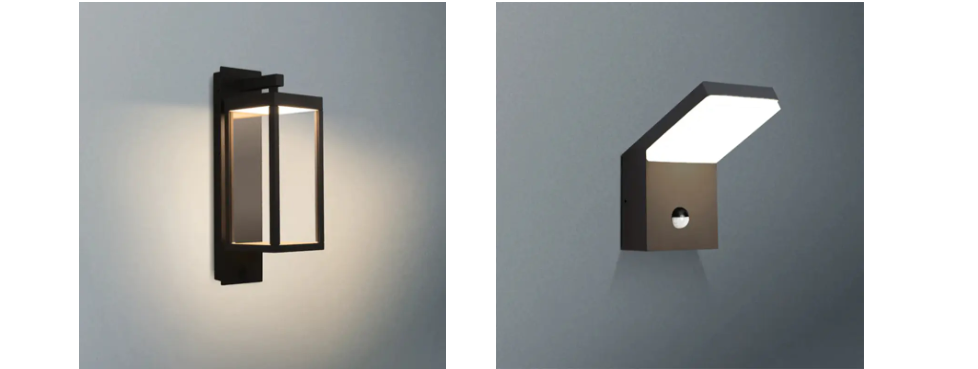
External wall lights with motion sensors are increasingly popular in homes and outdoor spaces due to their intelligence, energy efficiency, and high safety. However, many users encounter a common problem: insufficient sensor sensitivity. For example, the light may not turn on even when someone walks by, may only trigger when someone is very close, or may not respond at all. This may be related to the installation environment, settings, sensor condition, or even the quality of the light fixture itself. We will now systematically explain the causes and provide effective solutions.
1. Check the sensor angle and direction
Most motion-sensor wall lights use PIR infrared sensors, which work by detecting temperature changes in humans or animals.
If the sensor angle is incorrect, the sensitivity will naturally decrease significantly.
Solutions:
(1) Adjust the sensor's orientation so that it faces the area where people pass by.
(2) Avoid locations that are easily obstructed, such as corners, bushes, or steps.
(3) Ensure that the sensor's detection range is not blocked by flowers, decorations, awnings, etc. Many users focus only on the direction of light illumination during installation, neglecting the sensor's viewing angle, leading to reduced sensitivity.
2. Check Ambient Temperature and Background
PIR sensing is significantly affected by temperature differences—when the difference between "human body temperature" and "background temperature" is not significant, the sensor has difficulty recognizing the sensor.
Potential situations that may reduce sensitivity:
Overly hot weather, with wall temperatures close to human body temperature
The light is installed near a metal wall, causing heat reflection interference
Strong sunlight in winter raises the wall temperature
Solutions:
(1) Avoid installing lights near high-temperature walls or metal reflective surfaces.
(2) If possible, move the light to a well-ventilated, shady location.
(3) Choose a professional outdoor light with intelligent temperature compensation.
3. Clean the sensor surface
Dust, cobwebs, water stains, mud, etc., can block infrared light, causing sensor misjudgment or reduced sensitivity.
Solutions:
Gently wipe the sensor window with a dry cloth.
Avoid using alcohol or strong cleaning agents to prevent damage to the plastic lens.
Regular maintenance is necessary in dusty outdoor environments.
4. Check power supply or battery level (solar wall lights)
Insufficient power can also cause the light to "not want to light up," appearing as if the sensor is not sensitive.
Possible causes:
Solar panel obstruction
Low power during consecutive cloudy or rainy days
Aging battery cannot be fully charged
Solutions:
(1) Ensure the solar panel faces south and is unobstructed.
(2) Clean the solar panel regularly.
(3) Check and replace the internal lithium battery after 1–2 years of use.
If it is an electrically powered wall light, check if the voltage is stable.
Insufficient sensitivity of motion-sensor wall lights is not always a sign of equipment malfunction; more often, it's caused by installation angle, ambient temperature, settings, or improper maintenance. Most problems can be easily resolved by adjusting the direction, optimizing settings, cleaning the sensor, and checking the power supply. If the issue persists after these troubleshooting steps, it's recommended to consider replacing the light fixture with a higher-quality one to ensure more stable sensing performance.
