
 English
Many people encounter the same problem after installing exterior wall lights: within a few months, either the LED bulbs fail, water gets into the bulb housing, or the entire light stops working. This not only affects nighttime illumination but also damages the overall aesthetics of the exterior wall and incurs additional maintenance costs. So, why are exterior wall lights so short-lived? Is it a quality issue or improper usage?
1. Inadequate Waterproofing
The biggest difference between outdoor and indoor lights is that outdoor lights must withstand rain, humidity, and dew in all weather conditions. If the waterproofing rating is inadequate, the following will occur:
Water gets into the bulb housing
LED bulbs become damaged by moisture
Short circuit
Rust and corrosion of the bulb body
Many cheap exterior wall lights are labeled "waterproof," but in reality, they only have a simple seal and do not meet the IP65 or higher standard. In heavy rain or prolonged damp conditions, water begins to accumulate inside the bulb, naturally reducing its lifespan.
Solutions:
Prioritize IP65/IP66 rated exterior wall lights. The light body should have rubber sealing rings, an independent driver compartment, and a drainage design.
2. Low-quality light source, rapid LED chip thermal decay
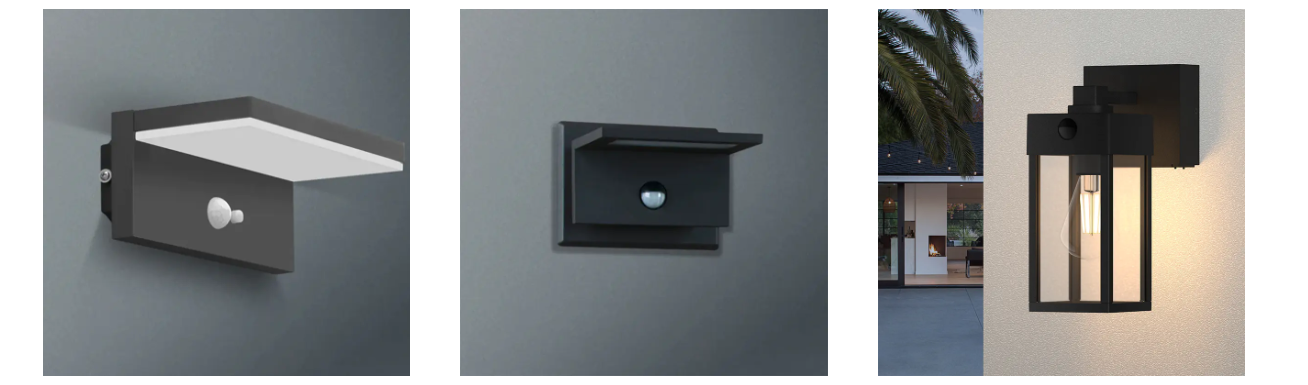
Many exterior wall lights use cheap LED chips with poor heat dissipation, resulting in rapid brightness loss. The light dims, flickers, or even burns out quickly.
LEDs are most vulnerable to high temperatures. Poor heat dissipation can lead to:
Accelerated chip decay
Internal solder joint detachment
Damage due to excessively high driver temperature
Especially for enclosed lighting fixtures, if the light body does not use aluminum for heat dissipation, the lifespan may be less than 2000 hours.
Solution: Choose exterior wall lights with aluminum alloy housings, heat sink designs, and brand-name LEDs (such as Samsung, Cree, and Osram).
3. Poor power driver quality leads to premature lamp failure
Many people believe that the brightness of a light depends solely on the LED chips, but the LED power driver is equally crucial and is a core component determining the lifespan.
Poor-quality drivers may cause:
Flickering
Failure to light up
Blown fuses
Risk of electrical leakage
Especially in outdoor environments with unstable voltage or high humidity, such as rainy days, damage is more likely.
Solution: Choose a high-quality power supply with isolated drivers, overvoltage and overcurrent protection, and surge protection.
4. Incorrect Installation
Fast failure of exterior wall lights is not always due to the light itself, but sometimes the installation method.
Common errors include:
Exposed wire ends, which can short-circuit when exposed to rainwater
No sealant on the back, allowing rainwater to seep into the light body along the wall
The light body is installed at an angle, making it difficult for water to drain
Outdoor wiring without a waterproof junction box
Using indoor-grade wiring that is not resistant to sunlight and moisture
These errors can easily lead to water ingress, corrosion, and power supply damage, significantly shortening the lifespan of the light fixture.
Solution: Ensure the bottom of the light fixture, wiring joints, and the back of the light body are properly sealed; use a waterproof junction box for the wiring; and correctly fix the light body at the correct angle.
